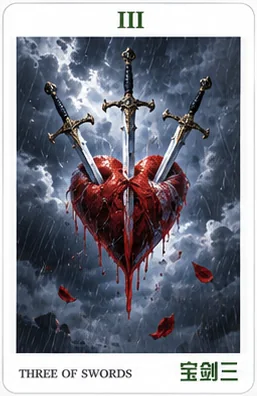
Three of Swords宝剑三
Air element: thoughts, communication, conflict, decisions
- Upright
- heartache, separation, disappointment, hurt
- Reversed
- healing, forgiveness, moving on, recovery
What this card is about
The Three of Swords depicts a heart pierced by three swords, set against a sky of heavy clouds and falling rain. The heart represents emotion and vulnerability; the swords stand for the wounds caused by thoughts, words, and actions. The rain suggests tears, but also a cleansing that follows. This card often appears when we are moving through pain, separation, or disappointment. It reminds us that hurt is real, yet it is not the end of the story.
Upright, the Three of Swords points to heartbreak, betrayal, or a truth that cuts through illusion. In relationships, it may show up as conflict, a breakup, or broken trust. At work, it can mean criticism, a failed project, or tension within a team. In personal growth, it often signals the need to face something we would rather avoid. As a Swords card, it highlights the power of communication—pain can come from what was said, or from what was left unsaid.
Reversed, this card suggests the beginning of healing: forgiveness, release, and the slow work of moving on. It does not promise instant recovery, but invites you to treat yourself gently. A question to reflect on: Am I willing to let go of an old wound and allow myself to move forward?
Updated 2026-10-01
Meaning by situation
Three of Swords · In love and relationships
In relationships, the Three of Swords often marks a clear sting: an argument, a separation, feeling misunderstood, or a truth you had been avoiding. Upright, you may replay the same conversation, feel tightness in your chest, sleep lightly, and search small details for meaning. Bring attention back to yourself: do you need to be heard, to be respected, or simply to rest? Reversed does not mean someone will return; it suggests you are letting the wound breathe—less self-blame, fewer message checks, a slower letting go. Where a relationship goes depends on both people's communication and choices. This card only asks you to care for how you feel right now.
Three of Swords · At work and in your career
At work, the Three of Swords upright tends to appear around sharp feedback, a rejected proposal, or disagreement within a team. You may feel questioned, or start doubting your own judgment. Observable signs: emotions that stay raw long after a meeting, endless edits with no clear standard, and reading criticism as a verdict on you. Reversed, the ache begins to ease—you review the process, clarify who owns what, and ask a colleague for support. This card does not predict hiring, promotion, or pay. It points to how you meet conflict: separate facts from feelings, and note what you can improve versus what was simply circumstance and timing.
Three of Swords · For personal growth
The Three of Swords invites you to sit with pain instead of rushing to assign blame. It suggests that admitting hurt is not weakness, and that saying “this hurt me” takes courage. Notice whether you habitually dodge emotions with busyness, humour, or over-analysis. Try naming what you feel, or writing a few non-judgmental lines. Growth here is not instant healing; it is learning to stay gentle with yourself in the face of a sharp fact, and to tell which beliefs are worth keeping and which are inherited fear.
Three of Swords · As advice
Take a quiet ten minutes and write down the single sentence that stings most right now. Beside it, answer: what does this sentence tell me I need? Turn that answer into one small act today—sleep earlier, message someone you trust, or leave that chat thread unopened for now.
Using it in a reading
When Three of Swords comes up, ask yourself:
- What stings most right now: the event itself, or an older wound it touched?
- Do I need an explanation, an apology, or simply to be quietly heard?
- If I stopped blaming myself, what is the smallest thing I could do for me today?
Then read it with its position and neighbours; the whole spread refines a single card.
Common questions about Three of Swords
Is the Three of Swords good or bad in love?
It reads more as a signal than a verdict—usually pointing to loss or disagreement that needs facing. Whether things improve depends on communication and self-care, not on the card guaranteeing an outcome.
What does the reversed Three of Swords mean?
Often read as the ache beginning to loosen: more willingness to forgive, review, ask for help, or finally rest. It does not mean someone returns, nor that the problem dissolves on its own.
What should I do when I draw this card?
Settle the feeling first, then the practical matter. Write facts and emotions separately, note what you can act on now and what needs time, and talk with someone trustworthy instead of replaying it alone.
Where this card often comes up
Real readings that drew this card
More examplesMore from Swords
Tarot offers reflection; card meanings are not a promise of any outcome.