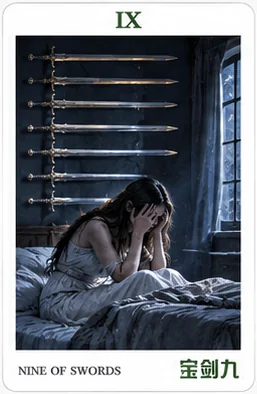
Nine of Swords宝剑九
Air element: thoughts, communication, conflict, decisions
- Upright
- anxiety, insomnia, fear, stress, worry, overthinking
- Reversed
- gradual recovery, accepting help, releasing pressure, hope, rest, support
What this card is about
The Nine of Swords often shows a figure sitting up in bed at night, face buried in their hands, with nine swords mounted on the wall behind them. Swords represent thoughts and words, and nine of them suggest a dense crowd of worries pressing in. The darkness and the bed point to fears that grow louder when we are alone, yet the blades do not touch the body, hinting that much of the suffering is woven in the mind.
Upright, this card speaks of anxiety, insomnia, persistent worry, and harsh self-criticism. In relationships, it can appear as overthinking a partner's mood or fearing abandonment. At work, it may show up as tension before a deadline or replaying a mistake long after it happened. In personal growth, it invites you to separate real threats from catastrophic imaginings.
Reversed, the card suggests the pressure may be easing. You might reach out for help, accept support, or find relief through rest and journaling. It does not promise that problems vanish, but it points to a window for recovery. A question to sit with: what kept you awake last night, and was it fact or a story you kept retelling?
Updated 2026-10-01
Meaning by situation
Nine of Swords · In love and relationships
Upright, you may overthink details in your relationship, leading to sleepless nights and magnified worries. This is not about what the other person thinks or feels; it is your own anxiety asking for attention. Reversed, you begin to voice these worries to a partner or friend, or seek support, and the pressure gradually releases. Your relationship may become more honest as a result. Notice your sleep and mood.
Nine of Swords · At work and in your career
Upright, you might be plagued by work stress—fearing mistakes on a project, worrying about criticism, or repeatedly checking details, which can affect sleep. These anxieties may exaggerate actual risks. Reversed, you start adjusting your pace, are willing to communicate difficulties with colleagues or supervisors, or seek resource support, and the pressure eases. Focus on small steps you can control, not outcomes.
Nine of Swords · For personal growth
This card invites you to see that your fears are often larger than reality. Practice writing down your worries and distinguishing facts from imagination. Try a relaxing bedtime ritual, or talk to someone you trust. Allow yourself rest instead of masking anxiety with busyness. You do not need to solve everything at once; just acknowledge what is there.
Nine of Swords · As advice
When this card appears in an advice position, it suggests writing down three things that make you anxious before bed tonight. For each, ask yourself: is this a fact or imagination? Leave the answers on paper and give yourself a pause.
Using it in a reading
When Nine of Swords comes up, ask yourself:
- Among my recent worries, which are facts and which are products of my imagination?
- Am I using busyness or avoidance to cope with inner unease?
- If I could tell someone about my fears, who would I turn to?
Then read it with its position and neighbours; the whole spread refines a single card.
Common questions about Nine of Swords
Is this card good or bad in love?
It reflects your current anxiety, not the relationship's outcome. It invites you to notice your emotions rather than predict good or bad.
What does the reversed position mean?
Reversed often means you are starting to face these anxieties, willing to seek help or adjust your mindset, and the pressure is gradually easing.
What if I keep drawing the Nine of Swords?
See it as a signal that you need rest, someone to talk to, or professional support. Try reducing bedtime stimulation and practising relaxation.
Real readings that drew this card
More examplesMore from Swords
Tarot offers reflection; card meanings are not a promise of any outcome.