Five of Wands权杖五
Fire: action, career, passion, creativity
- Upright
- competition, conflict, challenge, friction, negotiation, rivalry
- Reversed
- avoiding conflict, internal tension, easing friction, suppressed disagreement, tension release, avoiding confrontation
What this card is about
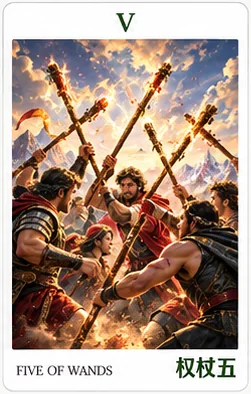
The Five of Wands shows five figures holding staves that cross and clash at different angles. No one appears to lead, and no one is clearly wounded. The fire element here becomes competition and friction: different opinions, rhythms, and goals meeting in the same space. The calm sky and ground suggest the conflict remains contained.
Upright, this card often points to rivalry, negotiation, and clashing perspectives. In relationships, it can appear as arguments, stubbornness, or a struggle over whose voice carries more weight. At work, it may reflect team disagreements, competing resources, or a collision of creative ideas. In personal growth, it invites you to face inner conflicting voices or to enter healthy competition as a way to sharpen yourself.
Reversed, conflict may be avoided or suppressed and turn into internal tension, or it may indicate that friction is easing. The card promises no outcome; it simply asks you to notice whether you are avoiding a necessary conversation or finding a more mature way to collaborate.
Reflection question: When opinions differ, do you want to win the argument, or to understand what each person truly needs?
Updated 2026-10-01
Meaning by situation
Five of Wands · In love and relationships
In love, the Five of Wands often shows up as friction over plans, priorities, or pace—who decides how the weekend goes, whose preference gets heard first. You may notice yourself competing for attention or talking past each other. Reversed, one person may withdraw to keep the peace, leaving tensions unspoken, or you may be finding a rhythm of compromise. Notice whether you are defending a position or actually sharing a need, and how quickly you move into defensiveness.
Five of Wands · At work and in your career
At work, the Five of Wands often appears in brainstorming, cross-team discussions, pitches, or when colleagues compete for resources and airtime. You may feel challenged or find yourself repeatedly defending your approach. Reversed, open conflict may fade while quiet friction, passive delay, or side-debates remain—or the team may be moving from debate toward execution. Notice how you speak in meetings: adding information, or trying to win the point. Shifting from “who’s right” to “what moves us forward” often helps.
Five of Wands · For personal growth
This card invites you to notice your relationship with conflict: do you treat disagreement as a threat or as information? Practise breathing when tension rises before deciding whether to respond. Notice your default pattern—moving toward competition, avoiding it, or freezing. Growth here isn’t about eliminating friction, but staying clear-headed within it and telling apart debates worth your energy from those that only drain it.
Five of Wands · As advice
When the Five of Wands appears in an advice position, pause the urge to rebut immediately. In your next disagreement, try restating the other person’s main point before adding yours, or offer one concrete small proposal to focus the discussion. This doesn’t promise any outcome—it just shifts attention from winning to moving forward.
Using it in a reading
When Five of Wands comes up, ask yourself:
- In my last disagreement, what did I really want to be heard about?
- Do I treat differing views as an attack or as extra information?
- Which debates deserve my energy, and which only drain me?
Then read it with its position and neighbours; the whole spread refines a single card.
Common questions about Five of Wands
Is the Five of Wands good or bad in love?
It reflects friction and adjustment rather than good or bad luck. Disagreement itself doesn’t decide the relationship; how you respond to it is what’s worth noticing.
What does the reversed Five of Wands mean?
It can suggest conflict turning inward—avoiding confrontation, storing resentment—or that you are starting to compromise and find a rhythm.
What should I pay attention to when I draw this card?
Notice whether a discussion is becoming a contest. Naming a shared goal before defending positions often helps.
More from Wands




Tarot offers reflection; card meanings are not a promise of any outcome.