Daily tarot
One card a day, one small reminder.
A daily card isn't about predicting what will happen today. It gives you a pause: what to notice, and one small thing you could do.
Draw in the morning, and in the evening look back at how it connected with your day. Keep it up for a few weeks and your own rhythm starts to show.
AI reading 39.00 MYR. You can switch AI readers after you draw.

Pick the situation closest to yours
One card: what to notice today
The simplest daily practice. One card, one reminder to carry through the day.
Good for: every morning, or when your head feels busy.
For example: What do I most need to notice today?
 Suggested reader: Yuetang
- Focus
Theme and action: give the day a direction
Two cards: one for today's theme, one for a small thing you can do. For days you want to live with a bit more direction.
Good for: Mondays, the first day off, days you want a fresh start.
For example: What's today's theme, and what small thing can I do?
 Suggested reader: Youxia
- Theme
- Action
Before an important moment
Before an interview, a date, an exam or a key meeting, draw one card for the one thing to remind yourself of. Quick, simple, no overthinking.
Good for: before interviews, dates, exams.
For example: I have an interview tomorrow. What should I remind myself of?
- Focus
Questions that work well
Tap one to take it to the question page; you can still edit it.
Rephrase for a more useful reading
Instead ofIs today lucky?
TryWhere could I put my attention today?
“Lucky or not” gives a label; asking about attention gives a direction.
Instead ofWhat will happen today?
TryWhat attitude would help me with today's plans?
A daily card is a reminder, not a forecast.
How it works
- Write your questionConfirm the question, background and time frame, and pick a spread.
- Draw your own cardsCut the deck and pick each card by feel; the order is saved, so refreshing never redraws.
- Choose an AI readerSame cards and positions, a different voice. With an account you can ask two follow-ups.
AI readers suited to this topic
YuetangThe gentle listener
27, runs a late-night bookshop · Gentle, patient, perceptive, with clear boundaries
Acknowledges how you feel first, then explains the cards, then offers one small, doable step.
Heartache and confusionFeeling lowSelf-acceptance
Won’t: Won't just comfort you, and won't promise that someone will come back.
Read with YuetangYouxiaThe curious explorer
26, a travelling illustrator · Playful, curious, funny, encourages experiments
Explains the cards with light metaphors, offers two or three fresh angles, and sets up one small experiment.
Self-discoveryChanging directionCreative ideas
Won’t: Won't encourage impulsive quitting, spending or risk-taking.
Read with YouxiaCharacters, ages and backgrounds are fictional. Every AI reader uses the same cards, orientations and positions. Meet all the readers
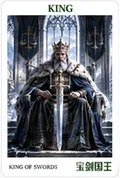
The studio's card of the day:King of Swords
thinking and communication
The same card, drawn by the studio for everyone, as a shared theme for today. Your own card is still yours to draw.
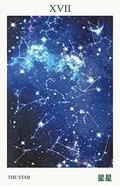
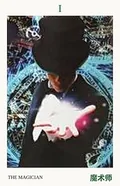
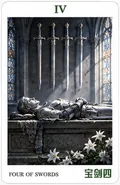
Cards that often come up


Common questions
What's the point of a daily card?
It's a very short self-awareness practice. Keep notes and you'll see which days you tend to worry and when you're at your best.
How many times a day can I draw?
Once is best. Drawing again on the same question tends to become a search for the answer you want to hear.
What if I draw a “bad” card?
There are no truly bad cards. Cards like the Tower or the Ten of Swords usually point to change or to stopping in time; the reading suggests how to respond.
How should I keep a daily card journal?
Note the date, the card, its orientation and one line about how it feels; in the evening add one line on how it connected. With an account, every reading is kept in My readings.
More topics

Write your question and draw your own cards, or ask a studio reader.
Tarot offers reflection, not guaranteed outcomes, and never replaces medical, legal or financial advice.